
What Is a Cesspool Sewer System?
A cesspool sewer system is an underground wastewater disposal structure that receives all the drainage from a home, holds the solid waste, and allows liquid waste to seep out through porous walls into the surrounding soil. It is one of the oldest forms of onsite wastewater disposal and is still common across Long Island, especially in homes built before modern septic requirements took effect.
The structure itself is often called a cesspool tank, although it works differently from a septic tank. A septic tank is sealed and passes treated liquid to a separate drainfield. A cesspool combines collection and drainage in a single pit. Wastewater from sinks, toilets, showers, and laundry flows into the pit, solids sink to the bottom as sludge, grease floats to the top, and the liquid in the middle filters out through the walls and base.
Because a cesspool provides little treatment before wastewater enters the ground, these systems require regular pumping and careful use. When they are maintained on schedule, they can serve a home reliably for decades. When they are neglected, they clog, overflow, and eventually fail.
If you already suspect a problem with your system, our team explains inspection and repair options on our cesspool repair service page.
How a Cesspool Sewer System Works
Every drain in your home connects to a main waste line that slopes downward and carries wastewater away from the house. In a home with a cesspool system, that main line empties into the underground pit rather than a municipal sewer.
Once wastewater enters the cesspool, three things happen:
- Solids settle. Heavier waste sinks to the bottom of the pit and forms a sludge layer that builds up over time.
- Grease and scum float. Fats, oils, and soap residue rise to the surface and form a scum layer.
- Liquid seeps out. The liquid layer in the middle, called effluent, passes through the porous block or precast concrete walls and drains into the surrounding sand and soil.
The soil around the pit acts as a natural filter. Long Island’s sandy soil drains well, which is one reason cesspools remained the standard here for so long. Over the years, however, two things reduce performance. The sludge layer grows until it takes up usable volume, and the soil around the pit becomes coated with a biological layer that slows drainage. Pumping removes the sludge, and periodic maintenance such as aeration can restore drainage in the surrounding soil.
Some properties use an overflow arrangement in which a primary pool receives the waste and a second pool accepts excess liquid. This adds capacity, but the same maintenance rules apply to both pools.
Cesspool vs Septic System: What Is the Difference?
Homeowners often use cesspool and septic interchangeably, but a cesspool septic comparison shows they are different systems with different strengths. Knowing which one you have changes how you maintain it, what it costs to service, and what your replacement options look like.
| Feature | Cesspool System | Septic System |
| Structure | Single porous pit that collects and drains wastewater | Sealed tank plus a separate drainfield or leaching pool |
| Treatment | Minimal; liquid seeps directly into soil | Solids break down in the tank; clarified liquid flows to the drainfield |
| Typical age of homes | Common in Long Island homes built before the 1970s | Standard for newer construction |
| Pumping frequency | Every 2 to 3 years, often more for heavy use | Every 3 to 5 years in most households |
| Lifespan | 20 to 40 years with proper care | 25 to 40 years or more for the tank; drainfields vary |
| New installation today | No longer approved for new construction in Suffolk County | Required standard, including newer nitrogen reducing designs |
The quickest way to find out which system you have is to check your property records or schedule an inspection. A technician can locate the system, confirm its type, and assess its condition in a single visit. Our cesspool and septic maintenance team performs this evaluation as part of routine service.
Parts of a Cesspool System
A cesspool is a simple structure, but each part matters when something goes wrong. Here is what makes up a typical system:
- Main waste line. The pipe that carries all household wastewater from the house to the pit. Blockages here cause backups inside the home even when the cesspool itself is healthy.
- Inlet. The point where the waste line enters the pit. Root intrusion and pipe settling at the inlet are common repair items.
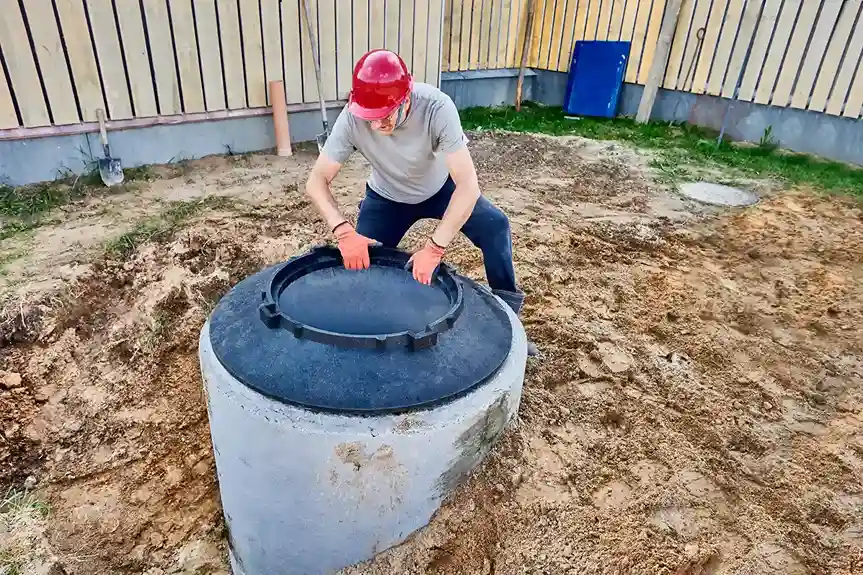
- Cesspool tank or pit. The main chamber, usually built from precast concrete rings, cinder block, or brick in older homes. The walls are porous by design so liquid can escape.
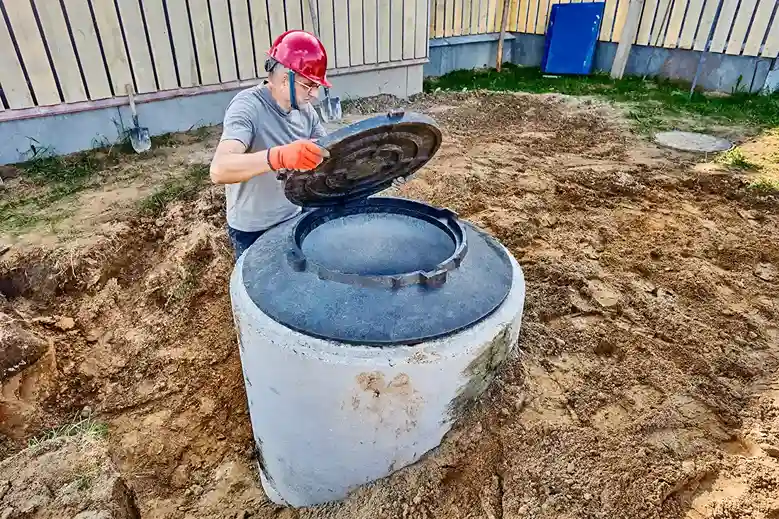
- Cover and access lid. A concrete or heavy plastic cover at or below grade. The cover must remain intact and accessible. Deteriorated covers are a serious safety hazard because they can collapse under weight.
- Overflow pool (on some properties). A secondary pit that receives excess liquid from the primary pool.
- Surrounding soil. Not a manufactured part, but the most important component of the system. The soil accepts and filters the effluent. Once the soil around a pit becomes saturated or clogged, the system loses capacity no matter how often it is pumped.
Older brick and block cesspools deserve special attention. As mortar deteriorates, the structure weakens, and sudden collapses can and do happen on Long Island, particularly after heavy rain or when vehicles drive over the area. If your home is more than 40 years old and the system has never been evaluated, an inspection is worth scheduling before a problem forces the issue.
How Long Does a Cesspool Last?
A well built cesspool tank typically lasts 20 to 40 years. Some precast concrete systems serve even longer, while older block and brick pits often fail sooner. The wide range comes down to five factors:
- Construction material. Precast concrete outlasts cinder block, and cinder block outlasts old brick and mortar.
- Soil conditions. Sandy, well draining soil extends life. High groundwater and clay layers shorten it.
- Household usage. More occupants means more water and more solids. A system sized for two people wears faster under a family of six.
- Pumping consistency. Regular pumping is the single biggest factor a homeowner controls. Letting sludge accumulate pushes solids into the surrounding soil and permanently reduces drainage capacity.
- What goes down the drain. Grease, wipes, harsh chemicals, and excessive water use all shorten system life.
It helps to think of lifespan in two parts. The structure can remain sound while the surrounding soil loses its ability to absorb water. When that happens, treatments such as aeration or hydro jetting can sometimes restore function. When the structure itself deteriorates, replacement becomes the only durable fix.
Cesspool Service: How Often Should You Pump and Maintain It?
Most Long Island homes with a cesspool system should schedule pumping every 2 to 3 years. That baseline shifts based on household size and system age:
| Household Size | Recommended Pumping Frequency |
| 1 to 2 people | Every 3 years |
| 3 to 4 people | Every 2 years |
| 5 or more people | Every 1 to 2 years |
| Any size with an older or undersized system | Annually |
Pumping on schedule is far cheaper than reacting to failures. A routine pump costs a few hundred dollars. An emergency call for a backed up system on a holiday weekend costs more and usually comes with cleanup expenses inside the home.
Beyond pumping, a complete cesspool service program includes:
- Inspection at every pump out. The technician checks sludge depth, inlet condition, cover integrity, and drainage behavior.
- Aeration when drainage slows. Compressed air fractures the compacted soil around the pit and restores absorption.
- Treatments and additives. Enzyme and bacterial treatments support the breakdown of waste between pump outs. They supplement pumping, they never replace it.
- Grease trap attention. For homes with heavy kitchen use, keeping grease out of the system prevents the scum layer from sealing the pit walls.
EZ Cesspool builds yearly maintenance plans around exactly this cadence, matched to your household and system age. You can read more about what a plan includes on our cesspool and septic maintenance page.
Cesspool Costs: Pumping, Repair, and Replacement
Costs vary by property, access, system size, and condition, so treat the figures below as planning ranges rather than quotes. On Long Island, homeowners can generally expect:
| Service | Typical Range | What Affects the Price |
| Routine pumping | $300 to $600 | Tank size, sludge volume, accessibility of the cover |
| Aeration | $500 to $1,500 | Severity of soil compaction, system size |
| Minor repairs (covers, inlets, piping) | $400 to $1,500 | Depth of the system, extent of excavation |
| Major repairs (structural, overflow pool) | $1,500 to $5,000 | Condition of the existing structure, site access |
| New cesspool or septic installation | $5,000 to $20,000 or more | System type, soil conditions, permits, property layout |
| Nitrogen reducing (I/A) septic system | $20,000 to $35,000 before grants | Technology selected, site conditions, county requirements |
Three cost principles are worth remembering:
- Maintenance is the cheapest money you will spend on the system. Ten years of routine pumping costs less than one premature replacement.
- Small repairs prevent large ones. A cracked cover or settled inlet pipe is inexpensive to fix today and expensive to ignore.
- Replacement pricing depends on what the county requires. New installations in Suffolk County must meet current standards, which affects both design and cost. Grant programs have been available to offset the cost of nitrogen reducing systems, so ask about current funding before assuming the full price is out of pocket.
For a precise number, an on site evaluation is the only honest answer. Request one through our contact page and we will assess your system and give you transparent pricing with no hidden fees.
Warning Signs Your Cesspool Is Failing
Cesspool problems rarely appear overnight. The system usually gives warnings, and catching them early is the difference between a service call and an excavation. Watch for these signs:
- Slow drains throughout the house. One slow sink is a plumbing issue. Every fixture draining slowly points to the system.
- Gurgling sounds. Air trapped in the waste line often gurgles in toilets and drains when the pit is full or the line is restricted.
- Sewage odors. Smells inside the home, near drains, or in the yard above the system indicate the pit is overloaded or venting improperly.
- Wet or spongy ground. Standing water or unusually lush green grass over the cesspool means effluent is surfacing instead of draining downward.
- Backups. Wastewater returning through the lowest drains in the house is the most urgent sign and needs same day attention.
- Depressions in the yard. Sinking soil above the system can signal a deteriorating structure and a collapse risk. Keep people and vehicles off the area and call a professional immediately.
If you notice one warning sign, schedule an inspection. If you notice several, treat it as urgent. Our team handles diagnostics and emergency response through our cesspool repair service, and emergency help is available any time of day.
Repair or Replace: How to Decide
The repair or replace question comes down to whether the system can still do its job after the fix. Use these guidelines:
Repair usually makes sense when:
- The structure is sound and the problem is a blocked line, damaged inlet, or failed cover.
- Drainage has slowed but responds to pumping and aeration.
- The system is under 25 years old and has been maintained.
- This is the first significant problem the system has had.
Replacement usually makes sense when:
- The pit has structurally collapsed or shows failing walls.
- The surrounding soil no longer absorbs water even after aeration.
- You are paying for emergency pumping several times a year just to keep the system limping along.
- The system is 40 or more years old and problems are becoming frequent.
- You are planning a major renovation or addition that increases wastewater load.
A useful rule of thumb: when the cost of repeated repairs within a few years approaches half the cost of a new system, replacement is the better investment. A new installation also resets the clock with decades of reliable service and brings the property up to current standards, which matters at resale.
When replacement is the right call, the process involves permits, excavation, installation of the new system, and restoration of the yard. An experienced installer manages all of it. Learn what to expect on our new cesspool installations page.
Cesspool Rules for Long Island Homeowners
Long Island homeowners operate under some of the most active onsite wastewater regulations in the country, driven by concerns about nitrogen pollution in local bays and groundwater. Here is what matters in practice:
- New cesspools are no longer approved. Suffolk County ended approvals for new cesspool construction years ago. When an existing cesspool fails beyond repair, the replacement will be a septic system that meets current county standards.
- Nitrogen reducing systems are the direction of travel. Innovative and alternative onsite wastewater treatment systems, often called I/A systems, treat wastewater to a much higher standard than conventional systems. The county has encouraged upgrades through grant and rebate programs.
- Grant funding can substantially offset upgrade costs. Suffolk County and New York State have offered programs to help homeowners replace aging cesspools with modern systems. Funding availability and amounts change, so verify current programs before making decisions.
- Inspections matter at the time of sale. Buyers, lenders, and attorneys increasingly ask about the condition and type of the onsite system. Documented maintenance history is an asset when you sell.
The practical takeaway is simple. Maintain the cesspool system you have, and when replacement time comes, plan for a modern system and ask about funding help before you sign anything.
The Cesspool Owner Checklist
Print this list or save it with your home records. It condenses everything in this guide into the habits that protect your system.
Every month:
- Watch for slow drains, gurgling, and odors.
- Keep grease, wipes, paper towels, and harsh chemicals out of drains.
- Spread laundry loads across the week instead of running them back to back.
Every season:
- Walk the area above the system and check for wet spots, odors, or sinking soil.
- Confirm downspouts, sump pumps, and surface water drain away from the system area.
- Keep vehicles and heavy equipment off the ground above the pit.
Every year:
- Review your last pump out date and confirm your next one is scheduled.
- Use enzyme or bacterial treatments if they are part of your maintenance plan.
- Check that the access cover is intact, secure, and reachable.
Every 2 to 3 years:
- Schedule professional pumping and a full inspection.
- Ask the technician about sludge levels, drainage performance, and structural condition.
- Update your records with what was done and what was found.
Keep on file:
- System location sketch or photos.
- Pumping and service receipts.
- Inspection notes and any repair history.
Conclusion
A cesspool sewer system is simple, durable, and entirely dependent on the care it receives. Homeowners who pump on schedule, watch for early warning signs, and keep harmful materials out of their drains routinely get decades of trouble free service. Homeowners who wait for a backup usually meet their system for the first time at its worst moment.
Use the checklist above, put your next pump out on the calendar, and get an inspection if your system has gone more than three years without one. And when the time for replacement arrives, plan it on your terms rather than during an emergency.
EZ Cesspool has served Long Island homeowners for more than 20 years with licensed, insured, and transparent service, from routine pumping to full system replacement. For a free estimate or same day emergency help, call 631-774-3336 or contact EZ Cesspool today.